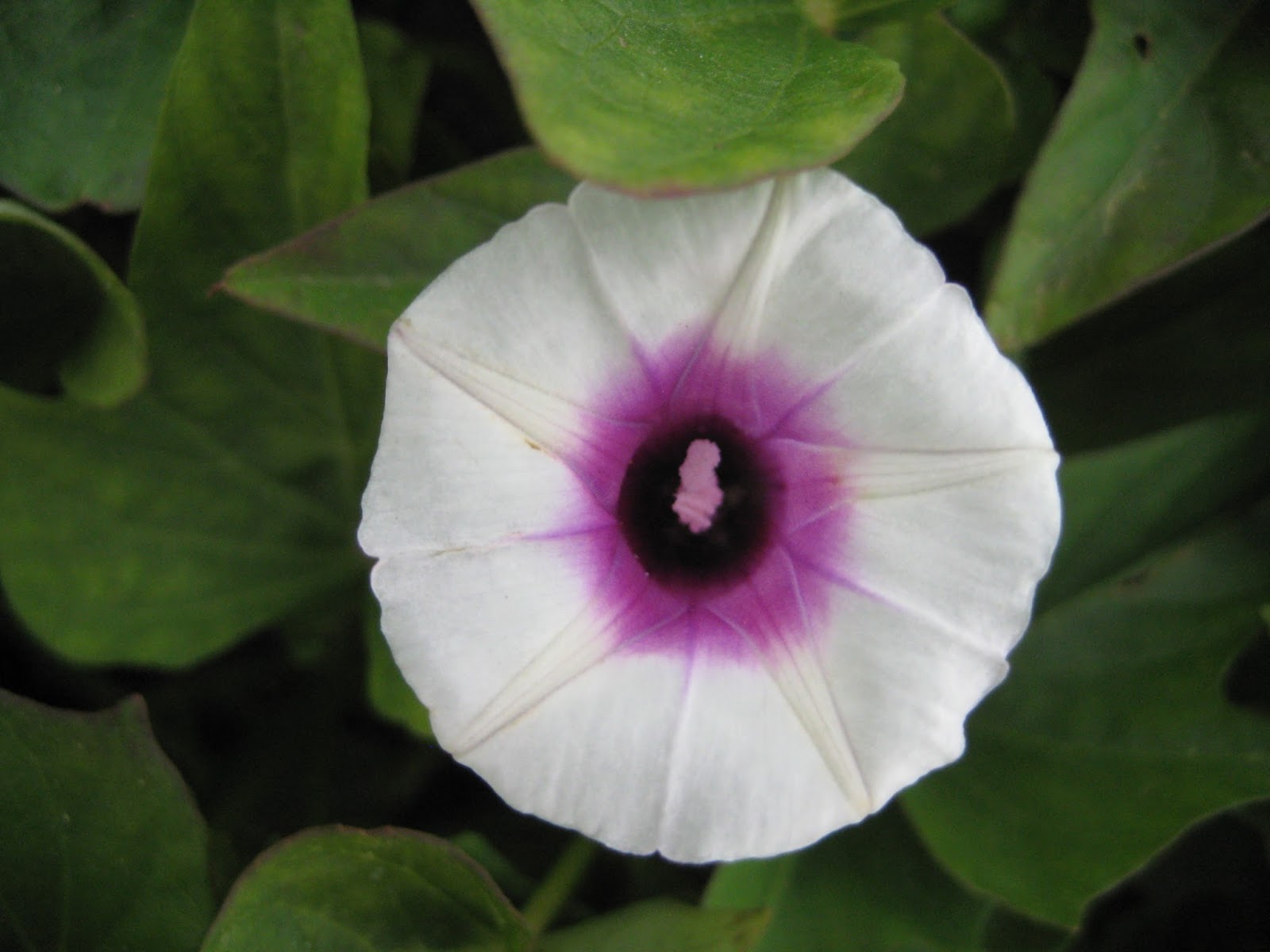
Showing posts with label sweet potato. Show all posts

Saturday, 24 February 2018

Results from 2017 and a sweet potato hiatus

I've been getting some requests to write down the results of my 2017 sweet potato grow-out, so I decided to share the below harvest table (yields in kgs) I made back in October. The numbered plants indicate sweet potato seedlings, mostly from my own seed, which is primarily a cross between Bonita and Purple. There is also some traded seed in there, though that generally did less well than my own. Though the difference in yield between individual plants of the same variety can be substantial (hence the table is somewhat biased against varieties of which I grew more than one), it's quite clear that some of these seedlings are performing at least as well as their parents. S17-022 stands out so much that I'm wondering if I made a mistake somewhere (though I really doubt it), so I'll need to confirm its potential in future seasons.

All plants were grown outdoors, without plastic mulching, and with the application of a floating row cover until the first day of flowering.


I also harvested much more seed than I did last year, probably more than 300-400, I didn't really count, but plenty to work with.

You'll notice that things have been a bit quiet around here lately, which has to do with some accumulating research obligations in my non-sweet potato life (it does exist!). I'm currently away from my garden for a year due to a visiting research stay abroad, which means my sweet potato breeding work is on hold until 2019. I've however shared my material with a number of other growers and hopefully I'll be able to report on their results in Fall. I'm eager to continue working with this material after that, it feels like we're making some early but promising progress on developing more cold-tolerant sweet potato varieties. I'll be back!

Saturday, 12 August 2017

Sweet potato breeding project - generation 1

First to flower and first to set seed -
seedling from a purple-leaved variety.
Let's talk batatas! Last year I managed to get some of my sweet potatoes to flower and produce seed, a first step towards breeding new, and in the long-run hopefully more cold-adapted sweet potato varieties. Since true sweet potato seed is a bit of rarity (at least in these parts of the world) and plant breeding significantly benefits from collective efforts (and since my own gardening successes tend to be somewhat erratic), I figured it would be wise to spread the responsibility a bit and so I distributed about half of my seed to other growers. I also received some seed back in trade, so that in total I had seed from 4-6 parent varieties. All of these were sown sometime in the beginning of April (if I remember correctly). Germination rate was high (it helps if you scarify the seed first), probably around 90%, and I ended up with some 50-ish seedlings of varying leaf types and growth habits. These duly went into the garden in the second half of May, a bit earlier than the varieties I'm propagating from slips. I took cuttings from most of the seedlings so that I would have at least two plants of each new variety, just as an insurance policy against unforeseen circumstances - think inadvertent gross neglect or sudden rodent mayhem.


Flower bud abundance
I cover all my sweet potatoes with a floating row cover until they start flowering, which happened surprisingly early for the seedlings. The first flower buds appeared at the end of June, when most of the plants were still fairly small, and by the end of July some of these seedlings were flowering prolifically. I'm not sure if this has something to do with the fact that seedlings were raised indoors, and that they were therefore subject to a fairly large change in temperature when they were planted out (though to some extent so were the slips, and they didn't respond in the same way), but it's something I plan to investigate further. Most of the plants that are flowering are putting out an abundance of buds, not unlike the variety Purple, which is likely to be one of the parents. In fact, all of my own seed is probably a cross between Purple and Bonita. I noted four flowering varieties last year, but I've since become convinced that the variety I named 'Nordic White' is actually Bonita, while Georgia Jet really only produced a handful of flowers at most, and even then late in the season.

Except for some hesitant hoverflies, the bees and bumblebees didn't seem all that interested in the flowers at first. I suppose that's what I get for seducing them, right next to the sweet potatoes, with a generous patch of lacy phacelia (Phacelia tanacetifolia), which is a veritable bumblebee-magnet. For a while I also didn't see any evidence of seed formation, but something has been busy with those flowers, because after returning from a trip abroad and rushing out to the garden today I found some seed pods on the plants that were flowering first (top picture). Bless you, loyal mysterious pollinator. To be fair, now that the phacelia is done flowering I've seen a number of white-tailed and red-tailed bumblebees on the sweet potato flowers. Together with the fact that the diversity of I. batatas genetic material in my garden this season is a lot higher than last year, I'm hopeful I'll get a good amount of seed by the end of the season. Since we're having a fairly average summer so far, with plenty of rain and so far very few really warm days, that would be a significant indication that I am able to get true sweet potato seed under normal environmental conditions here in southern Sweden. A few seasons of that and I might have reliably-flowering breeding material from which to start selecting for early and temperate climate-adapted tuberization. We're not quite there yet, of course, and it seems like temperatures will be staying below 20℃ over the next two weeks. Fingers crossed!

True sweet potato seed forming

Part of the sweet potato patch - 12 August
Apart from the seedlings, I'm also again growing the best from last year's varieties - Bonita, T65, Nordic Orange, Georgia Jet, Purple, as well as one of my Papua New Guinea seedlings from last year (Papua White-16), an old heirloom called Patriot, and two improved American varieties called Orleans and Bellevue that I received through the people at SLU Alnarp (the Swedish Agricultural University, who are currently also doing tests with growing sweet potato in southern Sweden). As last year, I noticed flower buds appearing on some of these plants by the end of July, and today I saw that Bonita has started flowering. Overall, I would say that things are going pretty well for the sweet potatoes. I lost three seedlings, probably to the voles, but that's it so far. To be continued!

Saturday, 26 November 2016

Seed!, Seed!, Seed!, Or: A bright beginning to batata breeding (for beginners)

So. Things have been a bit mad around here for the last few months, what with defending a dissertation and all, which means a lot of things became hopelessly delayed, including harvesting things, and writing blog updates about harvesting things. I'm slowly getting there though, even though I will abstain from making promises of more regular future updates. It is what it is, my tiny cohort of somewhat-loyal followers!


The sweet potato plot in late August - with bagged pods
First up, this year's great I. batatas success. Damnit.. now I already gave it away. To recap, I had 13 different sweet potato varieties at the start of this growing season. Burgundy never made it out of the house, so only 12 of them ended up happily populating the batata plot, together with some 20 seedlings derived from seed originating in the Papua New Guinean highlands (don't ask...). Of these 12, the two Papuan tubers I had (unsurprisingly) proved somewhat too exotic for these latitudes (the fact that they were late to produce slips probably didn't help) and didn't yield any offspring that I could keep for next year. This left me with 10 varieties that all considering did rather well I think. The table below gives the yields, and my rough attempt to evaluate how much space I allocated to each variety, in order to give an estimate of the relative yields. I should underline that the space allocations are estimates that probably have a significant error margin, since, well, I completely failed to measure them properly prior to harvesting. Still, it should give a general idea of what varieties did best this year. At least the general direction of these numbers corresponds to my (very unbiased, naturally) subjective impressions of the harvest.

Sweet potato harvest table - 2016


As you can see, the most productive variety in my garden this year was not T65 (surprisingly, given its reputation as one of the most cool climate-tolerant, and given its indisputed domination in previous years), but Nordic White, followed by an unnamed variety originating from Telsing (and that might, in fact, be T65 - you didn't think this was going to be easy or straightforward, did you?). Georgia Jet and its clone, Mystery - those sweet potato superstars of the temperate Americas - again failed to live up to its promises here in Sweden. I suspect that even though GJ is a short-season variety, it requires fairly high temperatures to produce decent-sized tubers, and we certainly have cooler summers here than in much of the northern US and southern Canada. That being said, this was in many ways a dream year (in relative Swedish terms) for sweet potatoes here, with a very warm spring followed by a fairly decent summer, followed again by an unseasonally warm September. I've added a temperature analysis below: overall this growing season was about 1.2°C warmer than the same period in 2015. As for a bit more details on my cultivation practices, all of the listed varieties were grown outside, on ridges, without ground cover. Plants were covered with row covers for the first half of the season, until around the end of July, when the first flower buds appeared.


This is most of the harvest except for Bonita, Nordic White and Nordic Purple

As expected, the PNG seedlings didn't produce all that much. Nevertheless, it was an interesting little experiment. There was large variety in terms of growth habbit, leaf shape and colour, tuber morphology and skin and flesh colour among the seedlings. White, cream, purple-ish and various shades of copper-coloured roots were all present. One plant yielded three medium-sized white tubers, which I will attempt to keep for next year. The rest will be discarded. All of this gives me little reason for sorrow because, my friends, I now also have more promising seeds to play with! The (F) behind Georgia Jet, Bonita, Nordic White and (Nordic) Purple indicates that these varieties flowered and set seed this year, which, as the internet might have told you, is somewhat of an anomaly in batataland. Georgia Jet produced only one pod (I believe), but might have contributed pollen to the others. Bonita and Nordic White were earliest  to flower and put out quite a lot of pods in the end, though the absolute flowering and seed-producing champion was Purple, which flowered some two weeks later but when it did made the others pale in comparison. I should note that Bonita and Nordic White, which I obtained from different sources, appear very similar and I'm not entirely sure anymore that they are in fact distinct varieties. For the time being, however, I will treat them as such. None of the seeds fully matured on the plants before I needed to harvest the tubers in the first week of October, so I cut off all of the stems with pods on them and put them in water indoors, until they had fully dried. I've tallied up the totals last week, and in total I now have 104 sweet potato seeds to play with next season. Excuse me while I make a little victory dance. I also got my hands on seed from three other varieties, produced by a fellow batata enthusiast in the US, so there should be a bit of diversity here to start working from. Now it's just a matter of upscaling seed production and growing out tens of thousands of seedlings in order to start selecting for adaptation to northern Europe. Easy! Maybe someone wants to contribute with some land and some long-term research funding?


Sweet potato seed pod
Malmö weather - 2016
2016 compared to 2015: avg temp between June and October 2016 was about 1.2°C higher than 2015

Sunday, 29 May 2016

Sweet potatoes and some sweet sweet potato seed

Slips ready to be potted
Summer's here! Well, that's what it feels like at least. We've been having an unusually warm May here, with a monthly average some 3°C higher than usual and extended periods of hot and sunny weather. As a result, the garden has gone into turbo-mode and I've already managed to plant most of the sweet potatoes. Usually the beginning of June is a more reasonable time for this, though I never seem to have the patience to wait that long. Now though, some are already starting to put out new growth, so my impatience is actually paying off for once. I have a bunch of latecomers that are refusing to put out slips, but with tropical weather forecasted for the coming week, they'll catch up soon I hope. Barring some serious force majeur, that means I now have a final list of the varieties I'll be growing this year:
  1. T65 - reliable producer, does not flower.
  2. Georgia Jet - should be a reliable producer, but did badly for me last year. I obtained what I hope is a better strain, so let's see. Should flower easily.
  3. Purple - (I called this Nordic Purple before, but I'm pretty sure it's the same variety that is elsewhere known by the name Purple) - purple-fleshed variety, not very productive but flowers profusely.
  4. Bonita - only had one plant of this last year, so it's hard to say how productive it was, but it flowers.
  5. Burgundy - same as with Bonita, plus the tiny tuber I managed to overwinter is just starting to put out slips. Flowers.
  6. 'Nordic White' - unknown white-fleshed variety, fairly productive here, and flowers.
  7. 'Nordic Orange' - medium productive, but I'm not sure if it flowers. I thought I saw some flowers on it two years ago. If it doesn't flower this year, I'll drop it.
  8. Mystery - a Georgia Jet mutant, haven't grown this before, but if it's anything like Georgia Jet it should flower easily.
  9. ? - a complete mystery this one! 
  10. Bunduguza - starchy white-fleshed African variety, lowish yield, no flowers.
  11. Burundi - starchy yellow-fleshed African variety, lowish yield, no flowers. This was the best out of all the African varieties I tested last year.
Then there's two varieties from the highlands of Papua New Guinea, a region that apparently can get quite chilly at night (relatively speaking of course, it's still a tropical area), and so should theoretically be somewhat cold-adapted. There's some hope, therefore, that compared to your average I. batatas variety, these two will feel a bit more at home here in maritime Malmö. They will join the others in the garden, provided they put out some slips soon. Both have roots, and one has a tiny slip forming, but I sure wished they'd hurry up a bit:
  1. Kainantu 
  2. Aiyura
I. batatas seed sprouting
And then, just as I thought I would get away with growing just 11+2? varieties this year, I received a small package with seeds. That is, proper sweet potato seeds, that rarest of things! These too are from the Papua New Guinean highlands. In practice, I suppose the chances are fairly slim that anything useful will come out of them. I generally put more faith in efforts to produce seeds under northern growing conditions, as Telsing Andrews has succesfully done last year, and as I hope to achieve myself this year. Nevertheless, a tiny chance is still a chance worth pursuing, plus it will be loads of fun to play around with these seeds. I promptly scarified some of the seeds with sandpaper, soaked them for half a day, and sprouted them. Germination rate was higher than I had anticipated, of the 35 seeds I soaked, 29 sprouted. That's 29 new sweet potato varieties, right there. Quite a bit of difference showed up in the phenotypes, with some seedlings showing intense red leaf colouring, some being completely green, and some lying somewhere inbetween. True leafs are deltoid or cordate, with a few of the seedlings having toothed edges.
About half of the seedlings
The batata battle plan for 2016 then: 1) Grow everything under a floating row cover for as long as practically possible, in order to speed up flowering. I've given this some thought and I didn't want to go the plastic mulching route just yet, I'd prefer to get seeds without too much 'cheating' technologies. Call me a botanical luddite! 2) Evaluate varieties for flowering onset, potential seed-set, and yield. 3) Share flowering varieties with collaborators in order to increase the chances of seedset under nordish conditions. 4) Acquire more flowering varieties. 5) Repeat.

 As simple as that!


Wednesday, 16 March 2016

Early spring musings - 2016

Time for the early spring musings - 2016 edition, also known as my Utopian elaborations on the coming season's gardening projects. As last year, early spring can here be interpreted rather euphemistically, seeing that the weather for the moment is still decisively wintery. But it's March, and March equals hope times plenty of ambition in my book. Without further ado, and in no particular order of appearance, here's a few of the projects that I intend to pursue in and around the garden this year:

 C. maxima landrace

Sweet Mama seed
Last year, I confessed to a 'slight' obsession with growing winter squash and elaborated on my intention of creating my own c. maxima landrace variety. I've eaten my way through most of the maxima stash by now and there's a definite pattern to be discerned. Sweet Mama is by far the most reliable and consistently delicious variety. Sweet Meat OH and Marina di Chioggia were a disappointment last year, which was surprising since Sweet Meat OH gets lavish comments all over the internet and Marina di Chioggia was one of my absolute favourite squashes the year before. The weather can probably be blamed here, since Sweet Mama is a short-season squash while the other two require a long growing season, which the chilly summer of 2015 failed to provide. As a result, those heavenly squashes that I ended up saving seed from were for the most part Sweet Mama's, with a couple of decent Green Hokkaido's and Burgess Buttercups making up the balance. Since this is the whole point of a landrace project, I'm proceeding as planned and will be growing out the F1's this year. In parallel though, I'll be making some controlled crosses as well, mostly to try and dehybridize Sweet Mama and to cross Sweet Mama with Marina di Chioggia, the idea here being that I wouldn't mind a shorter-season version of the latter. I also couldn't really restrain myself and I've bought a few (or, well, quite a lot...) new varieties to try out: Blue Kuri, Sibley, Blue Guatemala Banana, Bon Bon, Crown Prince, Buen Gusto de Horno, Blue de Hongarie.... Hmmm. I guess I'll never run out of new winter squash varieties to try...


The C. moschata project will be put on hold for the time being. I grew three moschata's last year: Longue de Nice, Long Island Cheese, and Waltham Butternut and I quite disliked the taste and texture of the first two varieties, though I'm not entirely sure they managed to mature fully. The butternuts were certainly not fully ripe when I picked them in early October, but after a few months on my attic they turned out to be a lot more tasty than I had expected. I think it would be worth pursuing a moschata breeding project here, but I simply don't have the space to do it this year. Something for the future...


Sweet potato

Nothing like starting sweet potato slips to indicate
the (imminent) arrival of spring!
Of the 37 sweet potato varieties that I trialed in 2015, most didn't produce anything worth keeping. A few did, however, so the sweet potato adventure continues into 2016. I'll attempt to be a bit more serious about producing seed this year, while also continuing to scour the planet in search of those more cold-tolerant varieties that simply have to be out there somewhere (Papua New Guinea, are you reading this?). The sweet potato gods were kind enough to provide me with some Georgia Jet (amongst others), so it will be exciting to see if it finally lives up to its reputation in my garden. I recently inspected the tubers that I had saved, and most of the larger ones made it through the winter fairly unscathed, despite extensive cutworm damage. Some of them already had tiny sprouts forming, so I've put them in water now, where they will sit happily for a few months and hopefully produce a good amount of slips by May or so. At the moment I'm counting on growing 10 different varieties this year, though knowing myself this number is likely to increase somewhat... More on this as sweet potato planting time is drawing near!


Skirret


Skirret. The roots get much more impressive
than depicted here though (img source)
Last year marked my first attempt at growing skirret (Sium sisarum), a perennial root vegetable in the Apiaceae family and one of the 'Lost Crops of the Europeans'. Introduced in Europe by the Romans from its Chinese homeland, skirret appears to have been quite popular in these regions until the 18th century or so, after which the potato's march across the continent pushed it into botanical oblivion. Having grown and tasted it, I would say it's high time for a skirret renaissance. The plants are hardy and form clusters of fairly thin white roots just below the surface, which can become quite large over the years (the root clusters that is, not the individual root 'fingers'). These can be left in the ground over the winter and harvested whenever the skirret cravings hit you. Essentially, you just dig up the plant when you need it, break off the most seductively looking roots, and replant the rest. Easy like skirret pie! The Dutch (suikerwortel) and Swedish (sockerrot) naming of the plant attests to its taste, which is sweet and very pleasant. In fact, skirret has soared rapidly in my vegetable hall of fame and became one of my absolute favourite vegetables last year, and I'm sure I haven't even begun to explore the full extent of its culinary delights. Peeling the pencil-sized roots can be a bit of a pain, but it's actually completely unnecessary since the peel does not interfere with the taste at all. Just scrub, cut and cook! Some reports mention that the roots can have woody cores, but I have not noticed this in any of the skirret I tasted last year.

There are some budding attempts underway to breed skirret varieties with fewer but thicker roots, which I'm hoping to make a modest contribution to. I've been getting seed from different places and also saved some of my own (skirret flowers every year and readily produces seed), so I will be growing out a lot of that and then start doing some selection. Of last year's plants I kept the ones that looked most promising, so it will be interesting to see how they do in their second year.


Oca

Another first for me last year was growing oca, a favourite amongst Andean tuber enthusiasts. Despite a fairly early frost I was quite happy with the result and I hope I can reproduce or improve upon the yield in 2016. I've been eating quite a lot of different oca's this winter and I must say they now rank quite highly in the aforementioned hall of fame. They're particularly good when baked in the oven. At some point it might be worth doing a more organized taste test to identify the tastiest and most starchy varieties, which definitely would be a criteria worth considering in any future breeding attempts. Anyway, I thought I already had quite a few different varieties last year, but then I went to visit Frank van Keirsbilck some time ago and I somehow - entirely inadvertedly, honestly! - came away with an additional 10 varieties. Together with the GOB trial that I will be participating in this year as well, and the grow-out of my own oca seeds, 2016 is promising to be a pretty oca-esque year. No complaints there!


The Great Legume Project


Some cute beans I'll be growing
Beans beans beans... With all the roots, tubers and winter squash that I am growing, I'm not usually at risk of suffering from carbohydrate shortage. I could definitely grow a bit more protein crops though, so for a while now I've been playing with the idea of upscaling my legume cultivation. Enter the 2016 Great Legume Project. This year's garden will have a large section dedicated to testing different legumes for dry seed consumption. Last year I already grew a Swedish lentil variety called 'Gotlandslins', but it mostly ended up feeding the local rabbit population and in the end I barely got more seed out of it than I had planted in the first place. Not entirely successful, in other words. I'll give this lentil variety another go this year, and I'm adding a bunch of different chickpea varieties (mostly from store-bought chickpeas, but also a black and orange variety from Adaptive Seeds in the US), different fava beans, dry bush beans, and a couple of Swedish heirloom 'gråärter' (grey peas), which apparently are called black peas or maple peas over yonder in Britain. I'm particularly excited about the chickpeas and the maple peas. The latter apparently were a northern European staple in the days of yore and are currently being promoted by some enthusiastic agriculturalists here as Sweden's answer to the chickpea. I'm quite fond of dried peas and they tend to feel comfy in somewhat colder climates, so I'm anticipating a bit of magic to happen between me and the peas this year. Chickpeas apparently are more cold-tolerant than I had thought (at least based on Carol Deppe's account in Breed Your Own Vegetable Varieties) so perhaps the prospect of a homegrown hummus is not as far-off as I had feared. As to the dry beans, the plan is to grow a classical Swedish brown bean, a couple of other heirlooms, and a few colourful short-season US varieties. More on this trial as it happens!


The Modest Melon Project

Last autumn I received a small treasure in the mail, containing the seeds from a cross between 6 early watermelon varieties and the offspring of one early muskmelon (Blenheim orange). As far as melons go, I've only ever grown a 'babymelon' variety before, on plastic mulch, and though they did quite well the taste wasn't all that exciting so I never really bothered continuing with it. The arrival of these early, and actually good-tasting varieties is about to change all that. Since I don't have access to a greenhouse on my allotment, growing melons is definitely a challenge which means that my aims with this year's melon project are very modest. I'll be growing a few plants of each variety/cross and hopefully get at least a melon or two out of it. In fact I'll probably be ecstatic if I manage to haul as much as one ripe melon to safety before someone ends up stealing it. Then I'll save seed and repeat ad infinitum. I suppose you know where this is going..


Residual trials

And then, of course, there's everything else. Before this post turns into a monster, let me just finish by mentioning some of the new arrivals that I'm fairly enthusiastic about. Detailed descriptions to follow later!

- Hopniss (Apios americana): Also known as the American groundnut, Indian potato, or potato bean, however you like to call it. This a tuber-forming legume that was highly valued by native Americans, who knew a thing or two about valuable food crops. It's a perennial that apparently takes a few years to really give a worthwhile yield, so I'm not exactly expecting bumper harvests. Nevertheless, as you might have figured by now I find the prospect of growing new root crops pretty impossible to resist.

- Yacon (Smallanthus sonchifolius): New root crop no. 2, this is another Andean native, relative of the sunflower and the Jerusalem artichoke. It's high-yielding and supposedly fairly easy to grow. Produces large, inulin-rich tubers that are crunchy and sweet and can be eaten like a fruit.

- Quamash (Camassia quamash): New root crop no.3, a perennial, native of North America, also highly valued by the continent's pre-Columbian inhabitants. Quamash needs a couple of years to bulk up as well, so expect plenty of pictures of microscopic tubers.

- Crosne (Stachys affinis): Alright, I admit it, I'm mostly growing root crops, or at least those seem to the plants that made it onto this not very random shortlist. Perhaps I should work on countering that bias... I do like my greens, really. Anyway, crosne or Chinese artichoke is a perennial of the Lamiaceae, or mint family. It forms masses of small, worm-like tubers that are supposed to be delicious but a bit of a pain to clean. Worm-like tubers, anyone?

- Potato (S. tuberosum Group Phureja): I fear I might be becoming a potato snob. I recently caught myself ranting about the qualities of Arran Victory, which was one of last year's potato revelations for me and as I recently discovered is described by William Woys Weaver (in 100 Vegetables and Where They Came From) as the ultimate potato. Is this treading the potato equivalent of microbrew hipsterdom and coffee snobbism? Please stop me if at my next restaurant visit you find me complaining about the inferior potato variety that I was served. In any case, no, this won't be my first year growing potatoes, but it will be my first to grow Inca Bella, which is a potato variety of a completely different subgroup from the S. tuberosum group that the vast majority of European potato varieties derive from. It's supposed to be really, really delicious, so take note fellow potato heads.

- Turnip-rooted chervil (Chaerophyllum bulbosum): I don't know what it is with me and this plant, but I've yet to succeed in getting it to sprout for me at all. This will be the third year that I'm trying to grow it. I sowed the seeds in autumn and they have been outside the whole winter (they need stratification), so if I don't get anything now I'm _so_ blaming the seed company (again). Root chervil is supposed to be very delicate in taste, and sounds well worth the painstaking effort required in growing it (painstaking for me, at least). Just checked the pot, nothing sprouting yet...

A baby pig nut... hopefully!
- Pig nut (Bunium bulbocastanum): In Dutch this is called aardkastanje, and in Swedish jordkastanj, both of which literally translate as 'earth chestnut', since the taste of the tuber supposedly resembles that of sweet chestnuts. This is another perennial in the Apiaceae family, and another plant that would probably benefit from some selection (or more correctly, we would benefit from that..) since yields are purportedly very small. Pig nut is a pretty rare plant (at least in Belgium and the Netherlands) so I'm not entirely sure that the seed I have is actually B. bulbocastanum. Time will tell, at least I've got something sprouting in the pot I sowed with this.

Right, that's not all of it, but a big part at least. I know, I know: next time, more greens!

Thursday, 15 October 2015

Ipomoea batatas vs the Swedish weather: 1 - 0

Buds and more buds, but no seeds
Time for results! On 3 October I decided that summer was irrevocably over hence that it was time to find out what the sweet potatoes had been up to this paltry summer. Let's start with the bad news. Despite some pretty eager hand pollinating from my side and profuse flowering in at least 8 sweet potato varieties by the beginning of September, my plants failed to set a single seed. Not one seed. I'm not quite sure why this is, though I have some ideas. Sweet potatoes are self-incompatible, but with 8 quite genetically distinct parents that should not have been an issue. Lack of pollinators is a possible factor, and I did indeed see very little insect activity around the flowers at the time, even though bumblebees are generally quite abundant in my garden. Perhaps I have a species of bumblebee with a very finicky taste in pollen, or perhaps there were simply more exciting flowers around at the time. The most likely saboteurs in the grand sweet potato breeding scheme though, are environmental conditions. I need to look into this in more detail, but given the failure of hand pollinations it seems possible that succesful seed set was inhibited by low temperatures (something we've had plenty of this summer) and/or inadvantagous daylength. Just today I was reading Ottawa Gardener's post on how she managed to get a few seed from Georgia Jet and a purple variety in her Canadian garden, so I'm convinced that it should be possible to produce seed here in Sweden as well, provided I can create the right conditions for it. I'll be putting some more thought and effort in this for next year, perhaps growing a few particularly floriferous varieties on clear plastic to expose them to higher temperatures. Last year at least I had some plants flowering as early as July, which seems like it might be a more sensible time to produce seeds here.

Unfortuntately, vine growth is not a good indicator for
tuber formation
On to the good news then. As my pitchfork and me made their way through the first sweet potato row that sunny Saturday at the beginning of October, I became increasingly jubilant. I won't be winning any yield contests anytime soon, but my expectations, admittedly quite low, have certainly been exceeded. As could be expected, the majority of varieties failed to produce any roots at all. Sadly, this includes some particularly promising, and tasty, varieties like Orphan and Mukekuru tarya bibiri, both of which produced very vigourous vines but had roots that were no thicker than a pencil. Nothing worth saving there. The Euro/American varieties overall did quite ok, though Georgia Jet was, again, a disappointment. This is a mystery to me, though I only had two plants and both came from cuttings that I was forced to keep alive throughout the winter, so they might not have gotten the best of starts. I'll be looking for a new source of Georgia Jet next year, ideas and donations are warmly welcomed.

As last year, Nordic Purple produced very long but fairly thin roots that are hardly worth eating, but since it is the most prolificly flowering variety I have I will hold on to it. Burgundy produced some good-size tubers, as did Bonita, Nordic White and (somewhat less so) Nordic Orange, so I will be saving some of those for next year, particularly since all of them flowered as well. By far the best variety was T65. This is the variety I had expected most of and it didn't disappoint, generally producing two or three supermarket-standard tubers per plant. Sadly enough, it doesn't seem to produce flowers, not in my garden during the last two years, and not in Frank Van Keirsbilck's for quite a bit longer. T65 is a Taiwanese variety that came out of a breeding project there, so perhaps any fellow sweet potato devotee knows of an interesting, flower-producing sibling out there?


Though the success rate amongst the African varieties was considerably lower, there were some pleasant surprises as well. Burundi and Bunduguza both bulked up enough to make me slightly excited. Bunduguza gave a fair amount of smallish roots, while the three Burundi plants actually produced roots that nearly rivalled those of Euro/American varieties like Nordic White. Others that I thought were worth saving for the moment were Kitekyeru, Alira, Kwezi Kume, Mushemeza, Kipapari and Rwabafurugi. By any standards, these are still very small sweet potatoes, but I think there might be something here to work with. With their high dry matter content, the African varieties are very different from the ones you would normally find in Europe, so it seems worth hanging on to as many of them as possible.


Since the objective this year was to find the most suitable varieties for my climate rather than to maximize yield, I'm judging the harvest by the thickness of the roots rather than overall productivity. This criteria roughly gives the following classification, from thickest (about 3 fingers wide) to thinnest (somewhat wider than a thumb):
And the winner is...
  1. T65
  2. Nordic White
  3. Burgundy
  4. Bonita
  5. Nordic Orange
  6. Burundi
  7. Bunduguza
  8. Kipapari
  9. Alira
  10. Mushemeza
  11. Nordic Purple
  12. Kitekyeru
  13. Rwabafurugi
  14. Asian Yam 2
  15. Kwezi Kume


15 varieties is considerably more than I have place to continue working with, so I will probably make a further selection later. A lot of the tubers are damaged by wireworm, which might provide problems with storage and cause additional casualties later in winter. For the moment, though, I'm very happy with this year's results. With an average mean temperature of 15.86 °C we had a fairly cold summer this year, particularly during June and July, which make me optimistic that this year's results can be replicated under most summers here. For anyone looking to grow sweet potatoes under similar climatic conditions, I'm convinced it's possible to get fairly respectable yields, consistently, provided one grows a variety like T65. I also grew the plants on ridges, which might have had a positive influence on soil temperatures as well. You could certainly increase your chances by using a plastic mulch, as advocated by Ken Allan, which is bound to boost yields considerably. Personally, I'm going to continue searching for varieties that do well also without plastic ground cover, though I might cheat a bit in order to induce early flowering and seed production. Yes, I'm just that stubborn.


You might be able to guess what I would like for christmas this year: Some more T65-class, early maturing and cold tolerant sweet potato tubers, and why not some seeds to top it off. Please?

Temperature data for Malmö, June through September 2015


Saturday, 12 September 2015

Batata anxiety

Mushemeza (left) and Sula 1 (right)
With just a few weeks left of sufficiently high soil temperatures, sweet potato anxiety is setting in. Harvest or no harvest, that's basically the question at the moment, I'm under no illusions that I will have a respectable yield at this point. May, June and July have been unseasonally cool here, but the weather did pick up a bit in August, so there has been quite a lot of top-growth over the past weeks. Nothing like last year though, when vines were all over the place. The slips that were planted at the end of May still seem to have an advantage over the others, even though temperatures were suboptimal at that time, so I might try to push the growing season a bit more next year. A plastic mulch would definitely have helped a lot with this kind of weather, but I've got excuses for not going down that path... I'm trying to evaluate possible cold-tolerance, plus I feel no desire to provide another feast for the resident vole population. In other words, I'll just have to suck it up and hope that some plants will at least provide me with some seedstock for next year.

Bunduguza (top) and Kwezi Kume (bottom)
As a gardener, of course, there's always additional reasons for anxiety, and I found some in the recent potato harvest. To accommodate for ever-expanding garden experiments I've taken on a second allotment this year, which had been lying fallow for a while and was pretty much covered with grass when I first dug it last autumn. I've planted both the potatoes and the sweet potatoes (as well as all the mauka, some mashua and all of the GOB oca) on this plot, only to discover recently that it's infested with wireworms. Wireworms are the larval stage of a number of beetles, which burry into all kinds of roots and make them susceptible to rot. They prefer the roots of various grasses and are therefore quite common in newly-dug gardens, but they usually hang around for a few years after the grasses have departed and in the absence of their favourite food they will devour just about any root they find. All of this year's potatoes have had some degree of wireworm damage, some being more hole than tuber. Since potatoes are a definite dietary improvement over grass roots, I can't really blame them, but the idea that wireworms might at this very moment be burrowing their way through an already scarce sweet potato crop, therefore diminishing its storability, fills me with insecticidal cravings. There's no wireworm problems in my first allotment, so my crop placement choices this year have been highly unfortunate to say the least.

It's not all misery and desperation though. So far I've counted 8 sweet potato varieties producing flowers. These are Murasaki, Georgia Jet, Bonita, Asian Yam, Kalebe, Burgundy, Nordic White and Nordic Purple. That comes down to 7 European/commercial varieties and 1 African variety, which is in line with what could be expected. Heirloom varieties seldom flower (at least outside of the tropics) because of a long history of vegetative propagation, while commercial varieties tend to descend from flowering plants simply because breeders need seeds to work with and thus select for florescence. That there's one African variety (Kalebe) flowering is quite exciting, so I'll try to pollinate it or at least keep it alive over winter if I don't get any roots. Possibly more varieties will follow as the days shorten (some sweet potatoes are daylight sensitive for flower induction). I'm seeing very few pollinators around the flowers, so of course there's no guarantee that there'll be seed. In fact, I've yet to see a seed pod forming, but I've marked some buds that didn't fall off immediately.. where there's ribbon there is hope! I might as well increase the hand pollinations too, I've had less time for that than I would have wished so far.

Kalebe flower
On a final note, I've recently been reading Ken Allan's excellent book 'Sweet Potatoes for the Home Garden; with Special Techniques for Northern Growers', which summarizes his experiences with growing sweet potatoes in Canada. Apart from repeatedly stressing the importance of using a plastic mulch to warm the soil (meh!), Ken recommends Georgia Jet as the variety of choice in colder climates. This was interesting to me because Georgia Jet by no means performed exceptionally well here last year. I got no roots at all and had to keep it alive as a cutting over winter, though admittedly I did plant it somewhat late. This year, Georgia Jet has been one of the least vigorous of all the varieties I planted. I don't know if this is because of the quality of the cutting, or because I maybe have a diseased specimen, but the two plants I have don't amount to more than a few spindly vines. It does, however, flower profusely. I've received my Georgia Jet from Frank van Keirsbilck, who has also been having some problems with it, so I was kind of bemused to read the lavish descriptions of Georgia Jet in Ken's book. Maybe I need to locate another source of it, just to give it another go.

I wouldn't mind that Indian summer now...

Tuesday, 28 July 2015

37 shades of sweet potato

Back in the middle of June I planted out all my sweet potato starts out in the garden. I could surely have nursed some a bit longer but they were beginning to suffer indoors and, frankly, I thought that anything I planted after that day would have very little chance of producing tubers anyway. I was also struggling a bit with the logistics of it all and was eager to have them out there rather than being dependent on my undivided attention. I'll have to devise a better system for next year, though it might already help to have less varieties to sprout and keep happy...

I counted them after planting and ended up with a total of 37 varieties. In no particular order at all these were

12 commercial European/American/Asian varieties: 
T65, Nordic Purple, Nordic White, Nordic Orange, Burgundy, Bonita, Murasaki, Georgia Jet, Asian Yam 1, Asian Yam 2, Okinawa Purple, Garnet

25 (mostly) heirloom African varieties: 
Alira, Kalebe, Silek, Kanya, Uganda Orange 1, Uganda Orange 2, Kipapari, Mukekuru Tarya Bibiri, Tangara, Kitambe, Orphan, Rwabafurugi, Kitekyere, Mpame Hegia, Nyariowera, Kwezi Kume, Sula 1, Sula 2, Burundi, Bunduguza, Mushemeza, Kidodo, NASPOT 1, Bamuhachira, Magabari

A map of the 2015 batata garden
Some of these were not particularly viable though, and in some cases I just chucked a yet-unsprouted tuber in the ground, hoping that against all odds it would still do something. The amount of plants per cultivar varied a lot; of some I got 20+ plants, of others just one. This almost exclusively had to do with how fast the different tubers sprouted. For those that were very slow-going I ended up with few (or no) plants. By now some of these have quite definitely died, so I'm probably left with under 30 varieties.

Nordic Purple (left) and T65 (right)
It's been my luck of course that, exactly in the year I'm embarking on this grand sweet potato experiment, we're experiencing one of the coldest summers in decades here in Sweden. Except for a few tropical days in the beginning of July, the last few months have felt more like early autumn, with exceptionally windy, chilly and rainy weather. Predictly the sweet potatoes haven't been all too happy with this and growth is just a fraction of what it was last year at this point (though I was growing them under plastic then, so it's hard to compare). The optimist in me sees this as the perfect selection pressure and thinks that if any of these plants yields something this summer, it will reliably do so most years. My pessimist self on the other hand is quite convinced that I will end up with absolutely no sweet potatoes whatsoever. Either way I'm hoping that August will bring some direly needed sun for these:

Sula 1
Rwabafurugi
Nordic Purple
If I would formulate my ambitions, they would consequently be quite modest (or at least I think so..). I would like to get some kind of tuber from at least 3 of these varieties, plus some seeds. If I would have to choose, then I suppose the latter would be the most important, since it would make possible the long, very, very long, process of breeding nordic-adapted varieties. For that to happen I will first need some more growth and some flowers though.. Indian summer, anyone?

Please, world, make it happen.